1

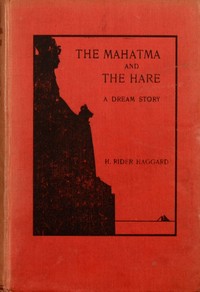
The Mahatma and the Hare: A Dream Story — Key Ideas to Explore
(0 User reviews)
47
Project Gutenberg
2006
Not confirmed
Fantasy fiction; Adventure stories
Readers of public-domain and historical texts
Project Gutenberg digital edition
en
Edition facts
Words
26,417
Reading time
115 min
Text sections
9
For The Mahatma and the Hare: A Dream Story — Key Ideas to Explore, the stored edition analysis reports 26,417 words, 1 hr 55 min estimated reading time, and 9 detected text sections.
The text analysis averages about 18.5 words per sentence, while the detected sections provide another way to judge how the source is divided.
Project Gutenberg metadata also associates the work with “Fantasy fiction,” connecting these edition facts with the source record’s subject description.
Source:
Project Gutenberg record #2764
H. Rider Haggard's dream story frames a hare's first-person account of persecution through hunting, coursing, and shooting, set against a supernatural Mahatma's silent judgment. The narrative shifts between the hare's visceral physical suffering and the detached, allegorical frame of the Great White Road.
Editorial Edition Score
4.7/5
★★★★★
★★★★★
Calculated from edition completeness, EPUB availability, text structure and catalogue metadata. Not a user rating.
How this score is calculated
- Description quality20 pts
- Title & short description10 pts
- Source metadata20 pts
- Text length15 pts
- Chapters / structure15 pts
- EPUB file integrity20 pts
Total of 100 points, scaled to a 2.5-5.0 range. Editions with an empty description or a missing EPUB file are not scored.
Edition quality
Public-domain source text
Read the source text
The source text is kept in the dedicated reader, separate from this catalogue record and its commentary.
H. Rider Haggard's The Mahatma and the Hare opens with a striking authorial note: two newspaper clippings from early 1911 describing hares drowning at sea or trapped in ice, which the author claims inspired this “fantasy.” The story proper begins with a sardonic comparison between a hare—familiar as a carcass in a poulterer's shop—and a Mahatma, a term the author glosses from the New English Dictionary as “great-souled” and possessing “preter-natural powers.” This contrast sets up a narrative that oscillates between earthy, physical detail and metaphysical abstraction.
The Hare's Voice and Physical Suffering
The hare's first-person narration is the most sustained and vivid element of the excerpts. It recounts specific bodily torments: a shot that left “six little grey tufts upon my back and one hole through my right ear,” and the agony of a back wound so severe that “the fur fell off, leaving sores upon which flies settled.” The hare describes growing “so thin that the bones nearly poked through my pelt.” These details ground the fantasy in a raw, sensory reality. The voice is colloquial and direct—the hare calls a wounded pheasant “very funny stumbling along on one leg”—yet it also reaches for philosophical wonder, as when it observes of a dead hare: “Death seems a very wonderful thing, Mahatma, but I won’t ask you what it is because I perceive that you can’t answer.” This blend of earthy observation and existential curiosity gives the narrative a distinctive, uneven texture.
Pace and the Shifting Frame of the Dream
The story's pace changes markedly between the hare's episodic, chronological account and the framing device of the Mahatma. The hare's tale moves through distinct phases: a period of recovery in a swamp, a return home, a shooting drive, a sister's death by poacher's noose, and a coursing chase. Each event is narrated with a steady, almost reportorial rhythm, punctuated by moments of sudden violence—the sister being “beaten to death,” a hare “shot quite dead by Giles” that “went over and over and lay as still.” In contrast, the Mahatma's appearances are static and oracular; the author's preface describes the vision of “the Great White Road, ‘straight as the way of the Spirit, and broad as the breast of Death,’” which halts the narrative flow into a symbolic tableau. The juxtaposition of the hare's hurried, sensory world with the Mahatma's timeless, allegorical space creates a structural tension that mirrors the story's central conflict.
Recurring Details and the Red-faced Man
A specific antagonist emerges through repetition: the “Red-faced Man.” The hare first mentions him as the owner of the property where the shooting occurs, then later as the master of the coursing dogs. The epithet is never explained, but it recurs with the weight of a curse. The hare's sister is killed by poachers on the borders of his land; later, the hare itself is chased by dogs that belong to him or his associates. The author's preface notes that the Mahatma “expresses no opinion as to the merits of the controversy between the Red-faced Man and the Hare,” leaving the figure as a symbol of predatory authority rather than a developed character. Other recurring details include the “big wood” as a home territory, the “swamp near the sea” as a place of refuge, and the hare's growing contempt for dogs—until it learns “that there are many different breeds of these animals.” These small, repeated elements build a coherent geography and psychology within the dream logic.
Readers should attend to the way Haggard uses the hare's limited perspective to generate sympathy while withholding judgment. The Mahatma's silence and the author's own refusal to take sides leave the moral weight entirely on the reader. The dream frame invites interpretation, but the text itself offers no resolution—only the hare's relentless, physical story and the looming image of the Great White Road.
There’s something tender about the hare’s doomed voice, hunted by men who never once question their right to the chase. It leaves a quiet ache, the way the Mahatma’s silence looms. That same homespun solitude lingers in the old man and his stubborn chimney, standing together against time, unbothered by the world’s hurry. Sometimes comfort shows up in strange, small places. I and My Chimney — Inside the Classic feels like that, too.
There are no reviews for this eBook.
There are no comments for this eBook.
Reader reflection
Before you leave, reflect on the book
Use these questions to collect your thoughts before moving on.
Your progress
0
/
10
2
What was your overall reaction to the book?
3
How likely are you to recommend this book?
4
How much effort did this book require?
5
Would you read this book again?
6
Which part made the strongest impression?
7
How clear did the writing feel?
8
Did the book meet your expectations?
9
What is the main idea you are taking away?
10