
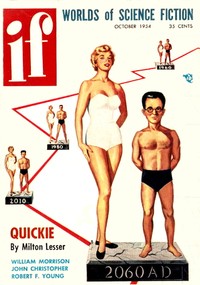
Quickie by Stephen Marlowe
Stephen Marlowe's 'Quickie' grabs you from the first page and doesn't let go. It's the kind of book you start reading and suddenly realize you've blown through half of it without looking up.
The Story
The plot is beautifully straightforward. Our narrator is a private detective hired for what should be the simplest job in the world: deliver divorce papers to a man named Arthur. It's a 'quickie,' easy cash. But when he gets to the apartment, he finds Arthur already dead on the floor. Before he can even process what he's seeing, the police show up. Now, he's not just a witness; he looks like the perfect patsy for the murder.
Stuck in a holding cell and staring at a murder charge, he has one option: solve the crime himself to prove his innocence. His investigation pulls him into a messy web involving Arthur's estranged wife, some suspicious business partners, and a lot of money that seems to have vanished. Every answer he gets only leads to two more dangerous questions.
Why You Should Read It
I love this book because it feels so real. The detective isn't a superhero. He's a regular guy in way over his head, using his wits and his knowledge of the city's underbelly to survive. You feel his panic, his frustration, and his dogged determination. Marlowe has a knack for writing dialogue that snaps and scenes that move with a cinematic energy.
The real theme here is trust—or the complete lack of it. In the scramble to save himself, the detective learns that no one is exactly who they seem, and the truth is a moving target. It's less about a grand conspiracy and more about the small, selfish lies people tell that spiral into disaster.
Final Verdict
'Quickie' is perfect for anyone who misses the classic, hard-boiled detective story but wants it without the dated baggage. It's for readers who like their mysteries lean, mean, and focused on the puzzle. If you enjoy stories where an ordinary person is forced to become extraordinary just to get through the week, you'll devour this. It's a masterclass in pacing and a reminder of why Stephen Marlowe was a giant in the field. Clear your afternoon before you start the first chapter.
This book is widely considered to be in the public domain. It is now common property for all to enjoy.
Charles Jackson
5 months agoFinally found a version that is easy on the eyes.
Christopher Gonzalez
2 years agoI took detailed notes while reading through the chapters and the visual layout and supporting data make the reading experience very smooth. I feel much more confident in my knowledge after finishing this.
James Garcia
5 months agoHaving followed this topic for years, I can say that the level of detail in the second half of the book is truly impressive. A refreshing and intellectually stimulating read.
Thomas Miller
1 year agoA sophisticated analysis that fills a gap in the literature.





Elizabeth Garcia
3 months agoAs a long-time follower of this subject matter, the structural organization allows for quick referencing of key points. Simple, effective, and authoritative – what else could you ask for?