1

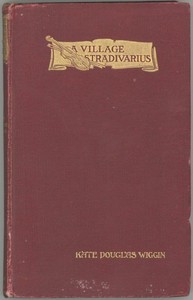
A Village Stradivarius — Edition Insights
(0 User reviews)
50
Project Gutenberg
2002
Not confirmed
United States -- Social life and customs -- 19th century -- Fiction
Readers of public-domain and historical texts
Project Gutenberg digital edition
en
Edition facts
Words
17,318
Reading time
76 min
Text sections
2
The catalog record for A Village Stradivarius — Edition Insights provides practical reading context through 17,318 words, 1 hr 16 min estimated reading time, and 2 detected text sections.
The text analysis averages about 23.6 words per sentence, while the detected sections provide another way to judge how the source is divided.
Project Gutenberg metadata also associates the work with “United States -- Social life and customs -- 19th century -- Fiction,” connecting these edition facts with the source record’s subject description.
Source:
Project Gutenberg record #3148
Kate Douglas Wiggin's 1904 story uses a blind musician's violin to explore how sound, silence, and description shape perception in a rural 19th-century village, with particular attention to the interplay between spoken word and musical expression.
Editorial Edition Score
4.5/5
★★★★★
★★★★★
Calculated from edition completeness, EPUB availability, text structure and catalogue metadata. Not a user rating.
How this score is calculated
- Description quality20 pts
- Title & short description10 pts
- Source metadata20 pts
- Text length15 pts
- Chapters / structure15 pts
- EPUB file integrity20 pts
Total of 100 points, scaled to a 2.5-5.0 range. Editions with an empty description or a missing EPUB file are not scored.
Edition quality
Public-domain source text
Read the source text
The source text is kept in the dedicated reader, separate from this catalogue record and its commentary.
The story opens with a boy reading aloud from an old instruction book, stumbling over the name "Paggernyner" (Paganini) while his blind uncle Tony listens. This scene immediately establishes the central dynamic: spoken language and musical sound are both imperfect vessels for conveying emotion and story. The boy, Davy, translates the written word into halting speech; the uncle, in turn, translates that speech into imagined music. Wiggin's prose dwells on the physical act of listening—the boy's sing-song monotone, the uncle's "dreamily raising his sightless eyes"—and the way a narrative can be felt rather than seen.
Diction and the Texture of Speech
Wiggin's dialogue is carefully pitched to reveal character through vocabulary and rhythm. Davy's interjections—"Cracky!" and his complaint about "tough old names"—mark him as a practical, earthbound child. Uncle Tony's speech, by contrast, is lyrical and abstract: "I feel that the secret of everything in the world that is beautiful, or true, or terrible, is hidden in the strings of my violin." The contrast is not merely one of age but of orientation: Davy sees the world as tasks (housework, reading aloud), while Tony hears it as potential music. Even the boy's descriptions of the sunset—"red as fire," "teeny little white feather clouds"—are concrete and visual, while Tony's responses are aural and interpretive. This lexical divide structures the entire opening.
The Violin as a Descriptive Lens
Wiggin avoids direct musical terminology, instead describing the violin's effect through metaphor and simile. The instrument is "veneered with rubies" in the sunset; its tones are "birdlike," "soaring higher and higher." When Lyddy Butterfield listens, the music becomes a "strange, sweet vision of mysterious joy" and a "soft wail of delicious woe." The prose borrows from Shelley's poem about a viol, but Wiggin's own descriptions are tactile and visual: the "hearth-glow" in which the violin was made, the "patient hands" that worked on it. The instrument is never merely an object; it is a repository of landscape, labor, and longing. The narrative voice itself becomes a kind of instrument, translating sound into image.
Silence and the Unspoken
Equally important to the story's texture is what is not said. Lyddy's emotional life is rendered through gesture and silence: she "fell into sweet, sad reveries" and "dreamed new dreams" after hearing the violin. Wiggin uses the negative space around speech to suggest interiority. When Tony says, "I can hear it myself when you read the story to me," he articulates a form of perception that bypasses the literal. The narrative repeatedly pauses on moments of listening—the boy's reading, the twilight concerts—where the action is internal. This restraint gives weight to the few spoken exchanges; every line of dialogue carries more because it emerges from a background of quiet.
Setting as a Character in the Dialogue
The village of Edgewood is not merely a backdrop but an active participant in the story's language. The kitchen door opens onto an elm tree and a millstone; the sun sets behind Brigadier Hill. These details are delivered through Davy's impromptu "paintings" for his blind uncle, turning the landscape into a spoken composition. The turkey's "roving disposition" and Lyddy's "little brown house" with its "warm red curtains" are rendered in the same plain, concrete diction as the characters' speech. Wiggin's setting is never described in a separate, authorial register; it is always filtered through a character's voice or a character's listening. This technique blurs the line between narration and dialogue, making the physical world feel as immediate as the characters themselves.
Readers attentive to Wiggin's choices in diction and description will find a story that is as much about the act of listening as about the events narrated. The blind musician, the practical boy, and the emotionally awakened woman each inhabit a different sensory world, and the prose shifts subtly to accommodate each perspective. Rather than a straightforward tale of village life, this is a study in how language can approximate—and fail to approximate—the experience of sound and silence.
That rainy afternoon, A Village Stradivarius lingered with me—how the blind musician’s silence made every spoken word heavier. Later, idly shelving books, I pulled down Wessex Tales — A Closer Reading, and found the same quiet attention to what rustles between people, the unplayed notes of a conversation.
There are no reviews for this eBook.
There are no comments for this eBook.
Reader reflection
What was your reading experience?
Capture what you thought, learned, and would like to remember.
Your progress
0
/
10
2
Was reading this book enjoyable?
3
Is this a title you would suggest to others?
4
How easy was the book to follow?
5
How would you rate its originality?
6
Could you apply anything you learned?
7
How closely did the book connect with your experience?
8
How strongly did the book affect you emotionally?
9
What changed or sharpened your thinking?
10