1

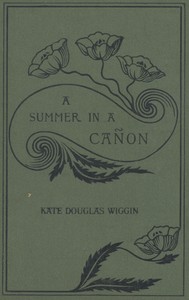
A Summer in a Canyon: A California Story — Text and Context
(0 User reviews)
907
Project Gutenberg
2002
Not confirmed
California -- Fiction
Readers of public-domain and historical texts
Project Gutenberg digital edition
en
Edition facts
Words
59,150
Reading time
258 min
Text sections
7
The catalog record for A Summer in a Canyon: A California Story — Text and Context provides practical reading context through 59,150 words, 4 hr 18 min estimated reading time, and 7 detected text sections.
The text analysis averages about 20.3 words per sentence, while the detected sections provide another way to judge how the source is divided.
Project Gutenberg metadata also associates the work with “California -- Fiction,” connecting these edition facts with the source record’s subject description.
Source:
Project Gutenberg record #3147
This editorial note examines how Kate Douglas Wiggin's 'A Summer in a Canyon' uses its camping setting to frame a series of playful disputes, theatrical performances, and domestic improvisations, focusing on the structure of scene transitions and recurring motifs of naming, dressing, and candlelight.
Editorial Edition Score
4.7/5
★★★★★
★★★★★
Calculated from edition completeness, EPUB availability, text structure and catalogue metadata. Not a user rating.
How this score is calculated
- Description quality20 pts
- Title & short description10 pts
- Source metadata20 pts
- Text length15 pts
- Chapters / structure15 pts
- EPUB file integrity20 pts
Total of 100 points, scaled to a 2.5-5.0 range. Editions with an empty description or a missing EPUB file are not scored.
Edition quality
Public-domain source text
Read the source text
The source text is kept in the dedicated reader, separate from this catalogue record and its commentary.
The opening scene of A Summer in a Canyon establishes a pattern of light-hearted conflict resolved by communal agreement. Geoffrey Strong, paintbrush in hand, is physically restrained by three girls while a small boy clings to his legs—all over what to name the camp. The dispute is settled not by force but by Aunt Truth's suggestion of 'Camp Chaparral,' a name that ties the group to the local landscape. This moment of negotiation, with its blend of physical comedy and verbal sparring, sets the tone for a narrative where decisions are made through collective, often theatrical, deliberation.
Naming as a Structural Device
The camp-naming quarrel is the first of several scenes where characters argue over labels and titles. Later, the group stages a play, assigning roles and costumes with similar intensity. The repeated focus on naming—whether of the camp, the play's characters, or the improvised costumes—serves as a structural anchor, marking transitions between activities. Each naming episode requires negotiation, revealing character through their preferences: Polly wants 'Camp Ha-Ha,' Bell pushes for 'Camp Frolic,' and Margery suggests 'Harmony Camp.' These preferences hint at personality without needing explicit exposition.
Costume and Transformation
The theatrical preparations in the tents showcase the characters' resourcefulness. Bell Winship creates a 'positively Neilson effect' from a pink muslin wrapper and cretonne trunk covers, while Polly Oliver struggles with a white wrapper to simulate a court dress. The boys, lacking material, resort to Hop Yet's blue blouse and a plaid shawl. These descriptions emphasize adaptation and creativity, turning limited resources into elaborate costumes. The candlelight that 'obliterated every freckle' becomes a recurring image, transforming ordinary appearances into stage-ready glamour. The act of dressing is itself a performance, with characters critiquing each other's efforts and offering compliments.
Candlelight and Lanterns as Atmosphere
Lighting plays a crucial role in the excerpts. The camp's festive appearance is achieved with 'four pounds of candles and twelve Chinese lanterns,' while the indoor scenes rely on candlelight to soften flaws and create a flattering glow. Polly's freckles vanish in the dim light; Bell's ill-fitting dress is forgiven because 'perhaps it won’t show in the dim light.' The reliance on artificial light underscores the temporary, constructed nature of their entertainments. It also mirrors the narrative's own selective illumination: the text focuses on moments of heightened emotion or comedy, leaving mundane details in shadow.
Movement Between Tents and Scenes
The narrative moves fluidly between tents, the outdoor kitchen, and the stage area, creating a sense of contained space. Characters call to each other across canvas walls, and conversations overlap as they dress in separate tents. This structure mimics the intimacy of camp life, where privacy is limited and everyone is within earshot. The shift from the naming dispute to the play rehearsal is seamless, with the same characters reappearing in new roles. The text uses these transitions to maintain momentum, avoiding lengthy descriptions of setting in favor of dialogue and action.
Readers attentive to the interplay of light, costume, and naming will find a coherent pattern beneath the seemingly casual episodes. The canyon setting is less a backdrop than a stage, and the characters' constant improvisation—whether in naming a camp or fashioning a costume—reveals a shared delight in making do. This editorial note encourages a reading that follows these recurring motifs rather than seeking a conventional plot.
Years among the shelves have taught me how one book tends to whisper to another. In that canyon, the children’s candlelit games and silly costume changes always felt like a gentle sort of homecoming. I find the same tender, unhurried warmth in A Message from the Sea — Reading Companion, as if both stories know that makeshift rituals can hold a family together quietly, without ever saying so aloud.
There are no reviews for this eBook.
There are no comments for this eBook.
Reader reflection
What was your reading experience?
Capture what you thought, learned, and would like to remember.
Your progress
0
/
10
2
How did the book work for you overall?
3
Would you encourage someone else to read it?
4
Did the language feel accessible?
5
How well did it match your expectations?
6
How would you describe its reading pace?
7
How strong was your personal connection to the text?
8
How would you rate its originality?
9
What changed or sharpened your thinking?
10