1

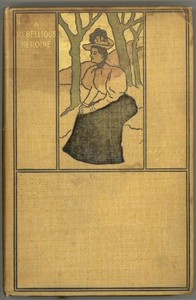
A Rebellious Heroine — Reading Companion
(0 User reviews)
54
Project Gutenberg
2002
Not confirmed
Authors -- Fiction
Readers of public-domain and historical texts
Project Gutenberg digital edition
en
Edition facts
Words
32,559
Reading time
142 min
Text sections
4
For A Rebellious Heroine — Reading Companion, the stored edition analysis reports 32,559 words, 2 hr 22 min estimated reading time, and 4 detected text sections.
The text analysis averages about 19.5 words per sentence, while the detected sections provide another way to judge how the source is divided.
Project Gutenberg metadata also associates the work with “Authors -- Fiction,” connecting these edition facts with the source record’s subject description.
Source:
Project Gutenberg record #3324
In John Kendrick Bangs's metafictional novel, a realist author named Stuart Harley finds his fictional heroine Marguerite Andrews refusing to follow his plot, leading to a crisis of authorial control. The excerpts reveal a playful tension between author and character, with Harley's frustration and the heroine's rebellion at the core.
Editorial Edition Score
4.6/5
★★★★★
★★★★★
Calculated from edition completeness, EPUB availability, text structure and catalogue metadata. Not a user rating.
How this score is calculated
- Description quality20 pts
- Title & short description10 pts
- Source metadata20 pts
- Text length15 pts
- Chapters / structure15 pts
- EPUB file integrity20 pts
Total of 100 points, scaled to a 2.5-5.0 range. Editions with an empty description or a missing EPUB file are not scored.
Edition quality
Public-domain source text
Read the source text
The source text is kept in the dedicated reader, separate from this catalogue record and its commentary.
Stuart Harley, a novelist who insists he merely transcribes life as it is, finds himself unable to control his own story. In the opening chapter, he argues that the novelist's mission is to be an historian, not a creator—yet his heroine, Marguerite Andrews, refuses to comply with his plans. Harley complains to a friend that 'that girl is impossible' and that he 'cannot control my story at all.' The excerpts show a writer trapped between his realist principles and a character who acts independently, turning the act of writing into a battle of wills.
The Realist's Dilemma
Harley's self-proclaimed realism is immediately undercut by his own experience. He tells a professor that the novelist 'should be quite as careful to write truthfully as is the historian,' yet when he tries to write a conventional romantic scene—a declaration between Marguerite and the wealthy Mr. Parker—the heroine behaves 'frigidly,' ignoring Parker's outstretched hand. Harley's intended plot collapses because Marguerite refuses to follow his scenario. The excerpts show him mapping out a meeting 'between Marguerite Andrews and a certain Mr. Arthur Parker,' but the result is a scene where she defies expectations. This tension between theory and practice is central: Harley's belief in transcription clashes with the reality of a character who will not be transcribed.
A Heroine Who Will Not Obey
Marguerite Andrews is not a passive figure. In the excerpt from Chapter IV, she enters the drawing room 'frigidly, ignoring his outstretched hand,' a direct contradiction of the romantic script Harley intended. Earlier, Harley laments that 'if I could, I could arrange my scenario to suit, but as it is, I cannot go on.' The heroine's rebellion is not just a plot point but a structural force: Harley says his mind is 'full of that woman' and that until she is 'caught between good stiff board covers' he cannot write another line. The excerpts present Marguerite as a character who asserts her own will, making the novel a comedy of authorial frustration.
Metafictional Play and Narrative Framing
The story is framed by a first-person narrator who is Harley's friend, listening to his complaints and reading the manuscript. This framing allows Bangs to comment on the writing process itself. The narrator advises Harley not to send a letter withdrawing from his contract, suggesting he wait until after a fishing trip. The excerpts include Harley's letter to his publisher, in which he admits 'that girl is impossible' and that he 'cannot control my story.' The illustrations listed—such as 'Am I a mere marionette?'—hint at the theme of character autonomy. The novel thus becomes a playful exploration of the relationship between author and creation, with the heroine's rebellion driving both the plot and the humor.
Humor in Frustration
Bangs uses Harley's predicament for comic effect. Harley's grand pronouncements about realism are deflated by his inability to manage a single character. He pounds the table and declares he may have to 'get a position as a salesman somewhere, or starve.' The exaggerated despair—'It's beastly hard luck'—is undercut by the absurdity of a novelist defeated by his own fiction. The excerpts show a writer who is both earnest and ridiculous, and the humor arises from the gap between his lofty ideals and his practical helplessness. The illustrations, such as 'He went into one of his trances,' suggest further comic episodes of authorial struggle.
The excerpts offer a glimpse into a novel that is as much about writing as it is about romance. Readers may find themselves watching for moments where the author's voice intrudes or where the heroine's independence surfaces. The tension between Harley's realist claims and his actual experience invites reflection on the nature of character and control in fiction. Approach the book as a comedy of artistic frustration, where the most rebellious element is not a person but a story that refuses to be told as planned.
It always amused me, that first book, watching Marguerite tangle with her own author—so willful, so certain. It reminds me of another quiet rebellion I’ve seen in the stacks, a different kind of stubborn heart finding its way in The Amazing Interlude — Reading Companion. Both share that gentle, unspoken thrill when a story insists on being more than planned.
There are no reviews for this eBook.
There are no comments for this eBook.
Reader reflection
Take a moment to reflect on this book
Create a short personal record of your experience with this book.
Your progress
0
/
10
2
How did the book work for you overall?
3
How likely are you to recommend this book?
4
How demanding did the text feel?
5
What did you think about the pace?
6
What was the strongest part of the book?
7
Would a second reading be valuable?
8
Would you like to discuss this book with someone?
9
In one sentence, what did you learn?
10